Pillars of Eternity
Description
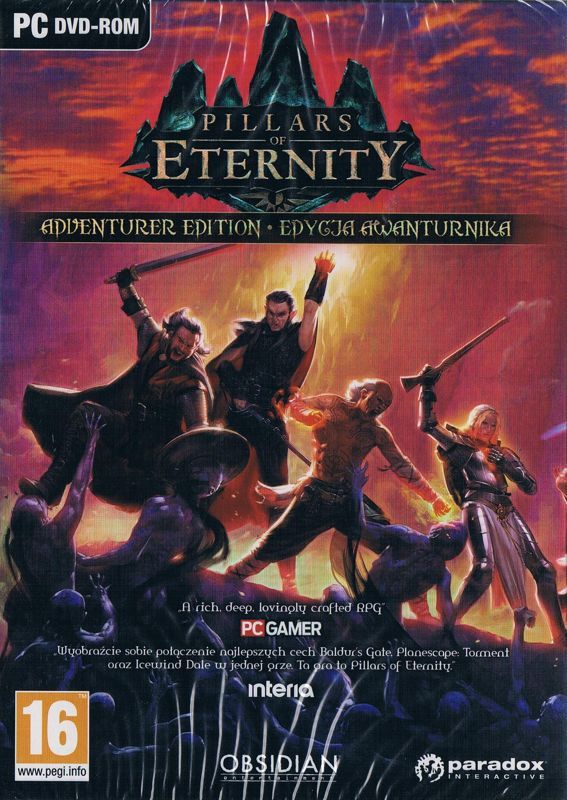
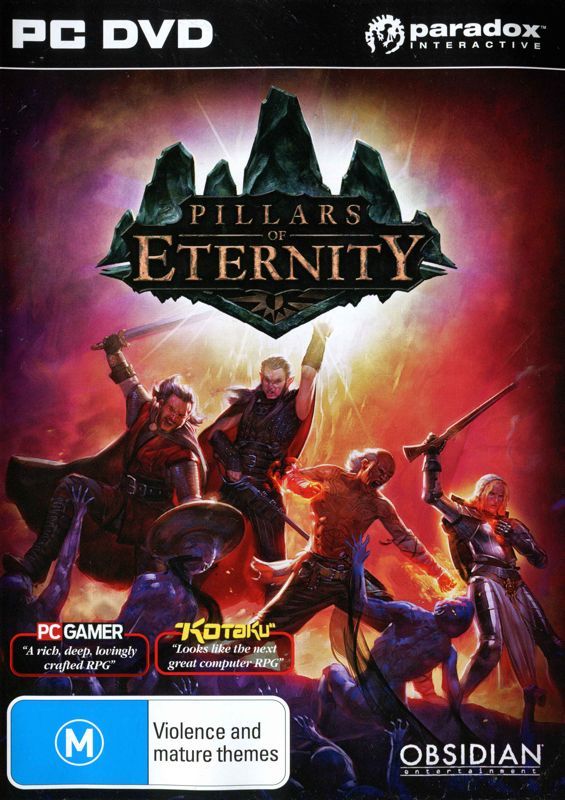
Pillars of Eternity is a single-player, party-based computer role-playing game. You awaken in the world of Eora as a traveler caught in a soul storm known as a biawac near the Dyrwood in the Eastern Reach. Surviving the storm leaves you a Watcher, able to perceive past lives and read the traces souls leave behind. Your immediate objective is to understand this condition and to trace its link to unrest in the region, which is troubled by questions of animancy and the fate of souls.
Play centers on forming an adventuring party of up to six characters, including recruitable companions with their own histories and motives, then exploring towns, wilderness, and dungeons in real time with a pause function for issuing commands. Encounters use Accuracy rolls against four defenses, Deflection, Fortitude, Reflex, and Will, rather than traditional to-hit armor classes. Characters manage two durability tracks, Endurance that depletes and refills each fight, and Health that depletes more slowly and is restored through resting, so attrition across a dungeon matters. Engagement encourages front-line control, with attacks of opportunity when enemies withdraw from melee. Resting fully restores resources and injuries, and limited Camping Supplies govern how often you can rest away from safe nodes.
Character creation offers six attributes, Might, Constitution, Dexterity, Perception, Intellect, and Resolve, that affect different parts of combat and dialogue rather than mapping directly to a single archetype. You choose a culture and background, then a class from options such as fighter, paladin, ranger, wizard, druid, monk, priest, rogue, chanter, cipher, and barbarian. Each class gains talents and per-rest or per-encounter abilities that shape battlefield roles, from martial control to spell support and crowd effects. Weapons and armor come with speed and recovery considerations instead of simple damage or defense ladders, and equipment can be enhanced through an enchanting system using gathered ingredients.
Exploration uses a Scouting mode to reveal hidden caches, detect traps, and enable Stealth approaches. Lockpicking, trap disarming, and scripted interactions consume supplies or tools and test party skills, sometimes branching to alternate solutions without combat. The player’s stash allows broad item storage that is accessible outside of combat, while quick slots and weapon sets support on-the-fly swaps within fights. Questing spans open hubs and multi-floor dungeons, with experience awarded primarily for completing quests and discovering locations rather than for killing every foe.
Conversation systems gate options behind attributes, skills, and knowledge the party has acquired. Reputation tracks two layers: faction standings across the Dyrwood’s groups, and personal disposition traits, such as Honest, Passionate, or Rational, that reflect how you tend to respond. These values unlock dialogue choices, reshape how NPCs react, and influence quest outcomes without aligning to a single moral axis.
A stronghold at Caed Nua becomes a long-term base once claimed during the story. You can repair wings/sections, construct buildings like a Barracks, Curio Shop, or Chapel, hire hirelings, send companions on side adventures, and gain resting bonuses that apply when you sleep on the estate. The stronghold generates taxes and can draw raids if its security is neglected, so periodic management intertwines with the main journey.