Pillars of Eternity II: Deadfire
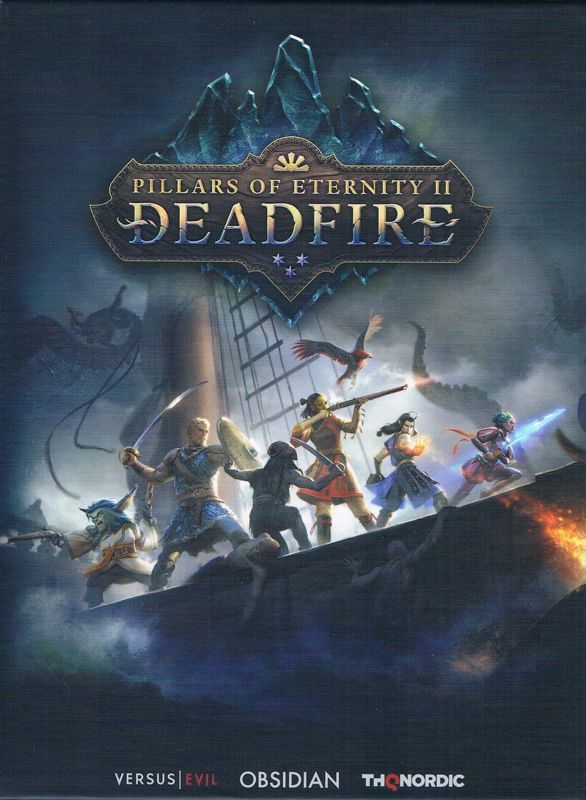
Description
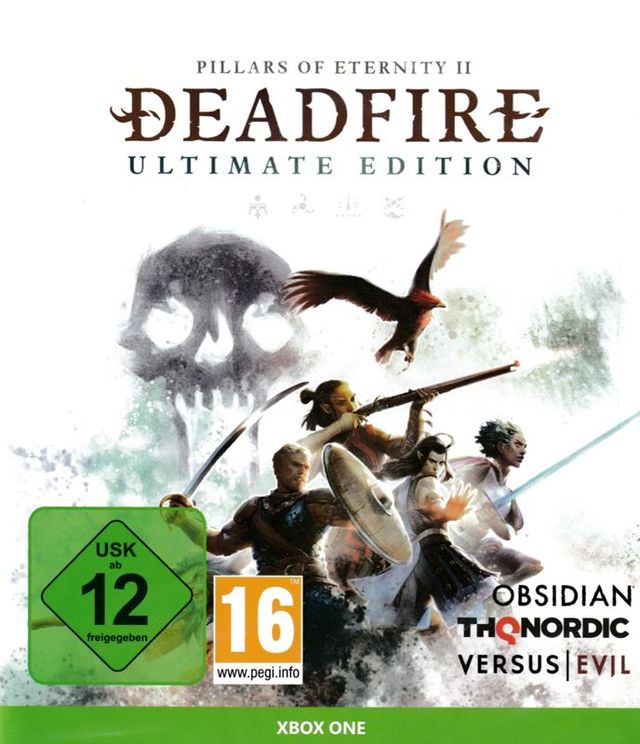
Pillars of Eternity II: Deadfire is a single-player isometric role-playing game.
In this sequel to Pillars of Eternity, the player again assumes the role of the “Watcher,” an individual gifted (or cursed) with the ability to peer into souls and witness past lives. Five years after the events of the previous adventure, the god Eothas awakens beneath the stone fortress of the Watcher and wreaks devastation. Stripped of part of their soul and left at death’s door, the Watcher is revived by the god Berath and tasked with pursuing Eothas into the archipelago known as the Deadfire. Their goal is to uncover the god’s design and avert a calamity that could reshape gods and mortals alike. Along the way the Watcher becomes enmeshed in a struggle among competing powers (including an imperial trading company, a pirate confederation, and native island tribes) each of which seeks control of the Deadfire region.
Gameplay in Deadfire builds on the class-based, tactical real-time with pause system of its predecessor. At the character’s creation the player selects race, class (such as fighter, wizard, ranger or rogue) and a variety of backgrounds; each class can advance into at least one of several optional subclasses that unlock new abilities. The party comprises the Watcher plus up to four companions, each with their own identity, skills and story potential. Experience is gained through exploration, quest completion and combat, which allows characters to level up, improve core attributes (such as Might or Constitution), invest in talents, and acquire better equipment from chests, merchants or loot.
Combat emphasises tactical positioning, action economy and managing multiple systems in real time with the ability to pause. Key mechanics include Action Speed (which influences how often a character acts), Defences (such as Fortitude, Reflex and Will) and Accuracy/Penetration ratings for attacks. Afflictions (negative status effects) and Inspirations/grants (positive buffs) add further nuance. Armour and resistances matter, and as the battle progresses characters may trigger Interrupts or deal with Engagement (which affects whether foes are tied to one ally). In addition to the classic mode the game later added an optional turn-based engine for players seeking slower, more deliberative combat.
Exploration takes on new scale with sea-faring and island travel. The Watcher commands a ship which serves as a mobile hub: the player charts a course through the Deadfire Archipelago, visits ports and islands, negotiates with local factions, hires crew, and engages in ship-to-ship combat or boarding actions. On land the world opens up into varied terrain from jungle to volcano island, with hidden treasures and dynamic quests. Skills such as Perception and Mechanics (previously “Mechanics” now emphasizing trap detection and lock-picking) contribute both in exploration and in interaction with the environment.
Dialogue plays a major role: the Watcher and companions engage in branching conversations where skills, background, and past decisions affect outcomes. Choices made in this game or imported from the prior title affect faction standing, companion loyalties and even world state. The skill system is enhanced over the predecessor: skills are split into Active and Passive, and party-assisted skill checks allow companions to contribute to dialogues and scripted events.
Additional features include faction reputations, ship upgrades, crew management, and a flexible difficulty system including optional Ironman and turn-based modes.