Signalis
Description
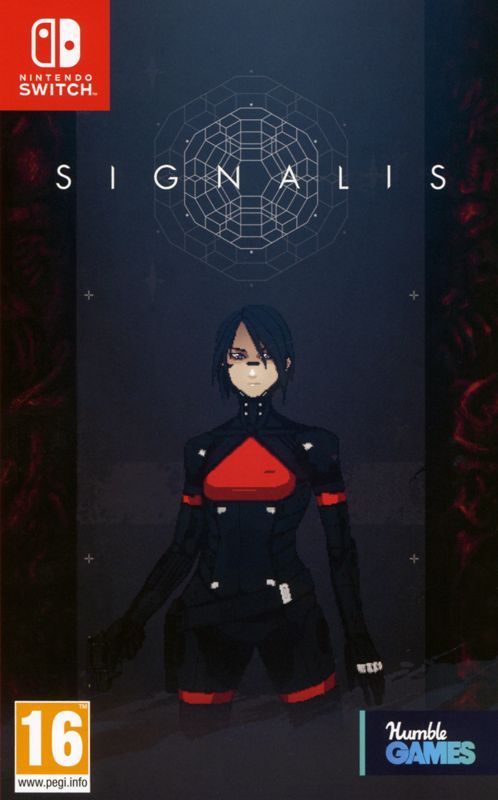
In Signalis, the player takes on the role of a Replicant — an android in the game's universe. Set in a retro-futuristic sci-fi world reminiscent of the original PlayStation era combining lo-fi pixel art with cinematic presentation techniques, Replicants serve as workers, soldiers, and assistants to the Gestalts — the human officers stationed across space colonies and mining operations. Something has gone terribly wrong. Former friends and coworkers have become enemies, and the player is now tasked with finding their missing Gestalt. To uncover the truth, they must explore a desolate facility, solve puzzles, and gradually piece together fragments of the story. The game explores themes of identity, memory, and the unsettling possibility that synthetic beings may possess more humanity than their creators are willing to admit.
Signalis is a game in the survival horror genre, demanding the player to seriously think if they will waste a bullet to shoot down an enemy or try to go around them, with inventory management being vital and even set in the lore. It combines elements from the original Biohazard / Resident Evil games and Silent Hill series, with a scarcity of the resources and inventory management, but also a heavy emphasis on puzzle solving.
Gameplay unfolds primarily from a diagonal-down perspective using detailed 2D pixel art. Movement and combat mechanics are reminiscent of classic survival horror: the player-character, Elster, can walk, run, aim, and shoot using third-person tank-like controls. Encounters are often tense due to tight environments and minimal room to maneuver, especially in narrow hallways where enemies block the path and evasion is difficult. Combat is deliberately clunky, with a soft auto-aim system that can miss under pressure, reflecting the mechanical limitations of early horror titles. Players can also choose to focus a shot instead of pulling the trigger right away, creating more tension but getting a chance of higher damage and effectiveness.
Inventory space is limited to six slots, which enforces a constant balancing act between carrying essential items (like weapons and healing supplies) and quest-related objects (such as keys or puzzle components). The player must frequently return to storage boxes located in safe rooms to reorganize or retrieve needed equipment, a system that prioritizes short-term planning over long-term hoarding. This constraint enhances the sense of vulnerability and tension, and is tightly woven into the core survival loop.
Exploration is nonlinear, with frequent backtracking through previously visited areas to unlock new paths using items, codes, or puzzle solutions. The map system automatically marks puzzle points and key locations to reduce aimless wandering. Puzzle design is grounded but complex, often requiring the player to piece together subtle environmental clues, inventory item details, or notes found throughout the environment. Solutions may involve searching photographs for codes, interpreting cryptic documents, or combining obscure items.
Ammunition is limited, and enemies, once downed, may reanimate unless their bodies are burned using rare thermite flares. As a result, avoidance is often preferable to engagement, reinforcing a cautious and deliberate playstyle. Some areas become progressively more dangerous if previously dispatched foes are allowed to return, increasing pressure on the player to make meaningful decisions under duress.
Safe rooms offer brief respite with soothing but eerie music and contain storage units and save stations. The flashlight becomes essential in darkened corridors, and leaving without it can dramatically increase risk. Throughout the game, progression into deeper, stranger areas—sometimes literally descending into gaping, surreal voids—mirrors the psychological unraveling of the protagonist and the shifting tone of the narrative.
Signalis emphasizes dread and disorientation over explicit horror. The audio design plays a significant role in this, using silence and ambient noise effectively to create unease. There are no jump scares, but the game maintains a persistent atmosphere of danger, with the ever-present threat of missteps leading to death or lost progress.