SimCity 2000
Description
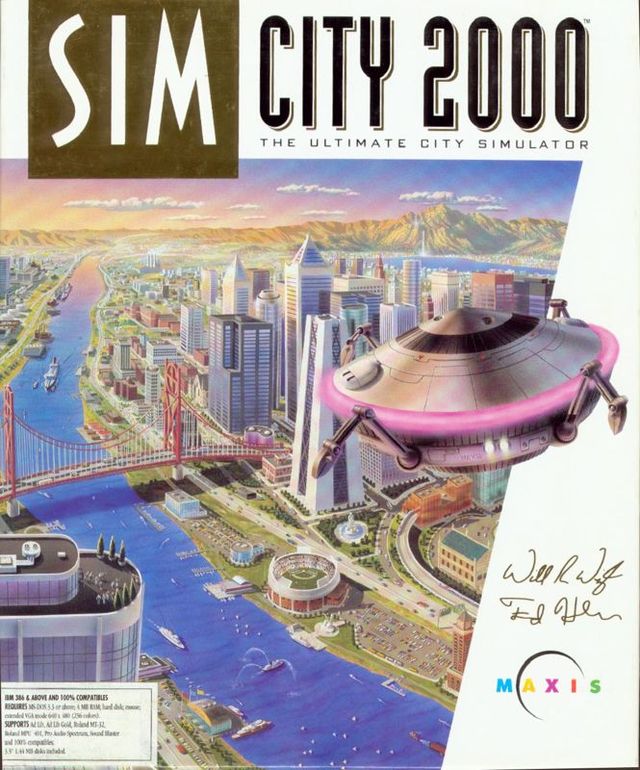
SimCity 2000 is a single-player city-building simulation game. The player assumes the role of mayor and city planner, tasked with designing, constructing, and maintaining a thriving metropolis. Unlike its predecessor, SimCity, this installment begins with customizable terrain: rivers, hills, valleys, and coastlines can be sculpted before the first zone is laid. The perspective has shifted to an isometric view, giving a more detailed and three-dimensional appearance to buildings, roads, and landscapes.
Core gameplay revolves around zoning land for residential, commercial, and industrial development, then providing the infrastructure and services necessary for growth. New options include “light” and “dense” zoning, allowing more control over neighborhood density. Cities must be supplied with power through power plants and electrical grids, and later with water via pumps, towers, and underground pipes. Traffic management becomes more complex, as players build roads, highways, railways, and subways to connect zones and reduce congestion.
The range of civic services has expanded significantly. Players can now construct hospitals, schools, colleges, prisons, police stations, and fire departments, each influencing city growth and public approval. New landmarks such as stadiums, airports, and zoos attract commerce and improve land values. Eventually, futuristic arcologies (self-contained megastructures that house tens of thousands of residents) become available, representing a dramatic step in urban development.
Finances are managed through city budgets and tax rates. Revenue from property taxes funds services and new construction, while loans can be taken out to cover shortfalls. Poor management leads to declining approval ratings, reduced growth, or even bankruptcy. Citizens provide feedback through multiple in-game newspapers, each with its own tone, reporting on traffic problems, pollution, crime, and civic events, replacing the single opinion poll of the original game.
The simulation also considers external factors. Neighboring cities appear on the region map, and trade agreements allow for resource sharing, such as selling water or electricity across borders. Disasters can be triggered randomly or by the player, ranging from fires and earthquakes to floods and alien invasions, forcing mayors to plan for emergencies with robust infrastructure.
Different versions introduced extra features. The Network Edition enabled multiplayer sessions where several players could manage different parts of the same city simultaneously. Console ports such as the PlayStation and Sega Saturn versions adapted the interface for controllers and sometimes altered menus or map navigation. Portable adaptations streamlined features for smaller screens.