Strange Horticulture
Description
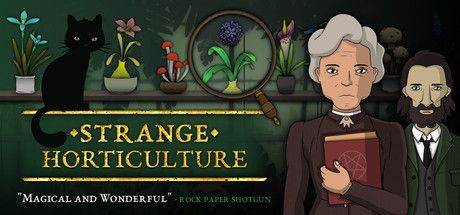
Strange Horticulture is a single-player puzzle and narrative-driven simulation game. The player takes on the role of the new proprietor of a small plant shop in the town of Undermere, a place surrounded by misty forests, rugged mountains, and ancient ruins. Customers arrive with requests for herbs and flowers that can heal, harm, or unlock hidden truths. Some seek remedies for common ailments, others require assistance for more dangerous pursuits. As the shopkeeper, the player’s choices in supplying plants influence unfolding mysteries tied to secret societies, occult forces, and the fate of the region.
Gameplay centers on plant identification and management. The player maintains a growing collection of unusual specimens, each with distinctive traits such as leaf shapes, flower patterns, or scents. An in-game encyclopedia provides partial information about each plant, and identification requires careful observation, testing, and deduction. Supplying the correct plant advances the story and strengthens reputation, while mistakes can result in dangerous or unexpected consequences.
The shop’s daily routine is structured around interacting with customers and managing inventory. Each plant must be stored, labeled, and organized within the shop’s limited space. Tools such as a magnifying glass, clues from the reference book, and experiments like brewing or smelling are used to determine a specimen’s true identity. As the collection expands, the challenge lies in distinguishing subtle variations and cross-referencing notes to solve identification puzzles.
Exploration outside the shop is handled through a map-based system. The player uses hints from letters, rumors, and conversations to pinpoint locations worth visiting. Sending expeditions to these places can uncover new plant species, rare ingredients, or cryptic lore. Travel carries a cost in time, so careful planning is needed to balance exploration with shopkeeping duties.
Secondary systems deepen the mystery elements. Some plants produce unusual effects when used, influencing characters in ways that alter story branches. Customers’ personalities and allegiances gradually emerge, with certain requests tied to occult rituals or hidden agendas. The player’s choices of which plants to provide, and to whom, can change the trajectory of the narrative, leading to multiple possible endings.