Yakuza 0
Description
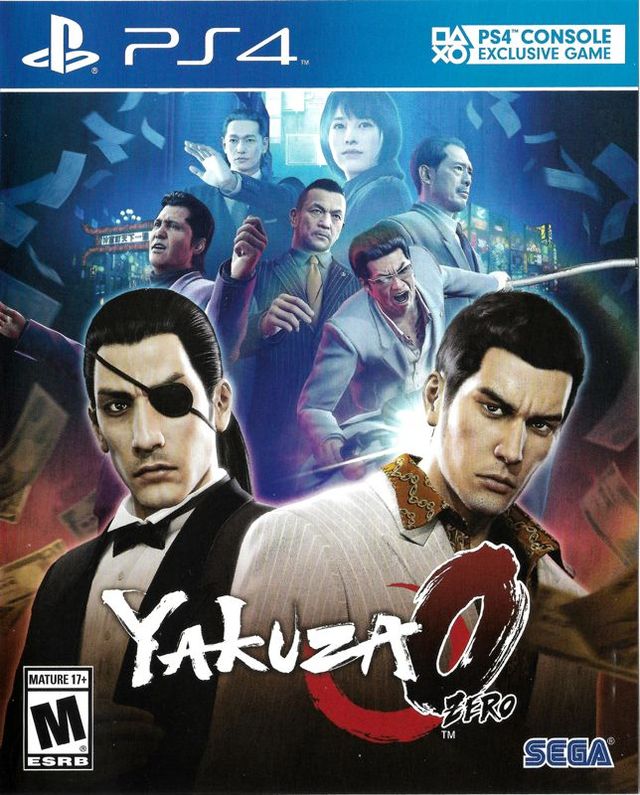
Yakuza 0 is a single-player action-adventure game that serves as a prequel to the original Yakuza, set a decade before the first installment. The story unfolds across two major locations: Kamurocho, a fictional district modeled after Tokyo’s Kabukicho red-light district, and Sotenbori in Osaka. Players alternate between two protagonists, Kazuma Kiryu and Goro Majima, with the narrative told in chapters that switch focus between them. Though their stories run parallel, the two characters never directly meet, each instead facing personal struggles that define their rise within the criminal underworld.
Both Kiryu and Majima feature unique fighting styles that are gradually introduced and expanded upon. Combat is rooted in the series’ traditional beat ’em up mechanics, with random encounters against street thugs, rival gangs, and other yakuza. Each protagonist can switch between multiple combat styles on the fly, adapting to enemies and situations. Money serves as the progression system, spent to unlock new techniques, expand combo strings, and strengthen abilities. Fights encourage improvisation, allowing players to use weapons, fallen objects, and environmental props such as bicycles, chairs, or neon signs. Health items and the “Heat” gauge, which fuels cinematic finishing moves, further shape the flow of battle.
Outside of combat, players explore the open urban environments, interact with NPCs, and take on a wide range of side quests. These optional encounters vary from comedic errands to dramatic sub-stories, often revealing eccentric characters and hidden depth in the game world. Additional skills can be learned from mentors scattered throughout the city, while shops and vendors allow the purchase and sale of items, weapons, and consumables.
A major addition to this entry is the introduction of business management systems for both protagonists. In Kamurocho, Kiryu undertakes a real estate venture, challenging a group of five powerful billionaires by purchasing properties, assigning managers and security, and upgrading holdings to expand control. In Sotenbori, Majima competes in the cabaret club scene, running host clubs to counter five rival magnates. This mode requires scouting, hiring, and training hostesses, customizing their appearance, style, and personalities to better attract wealthy patrons. Success generates income and unlocks new opportunities, blending strategy with resource investment.
Reflecting its 1980s setting, communication is handled through pagers and public payphones rather than cell phones. Payphones function both as save points and storage access, as inventory space is limited. Collectible phone cards scattered throughout the cities feature images of Japanese idols and can be exchanged to view live-action video sequences in specialized shops. Authenticity is reinforced by the inclusion of real-world restaurants and stores, where dining restores health and provides a cultural snapshot of the era.