Doom: The Dark Ages
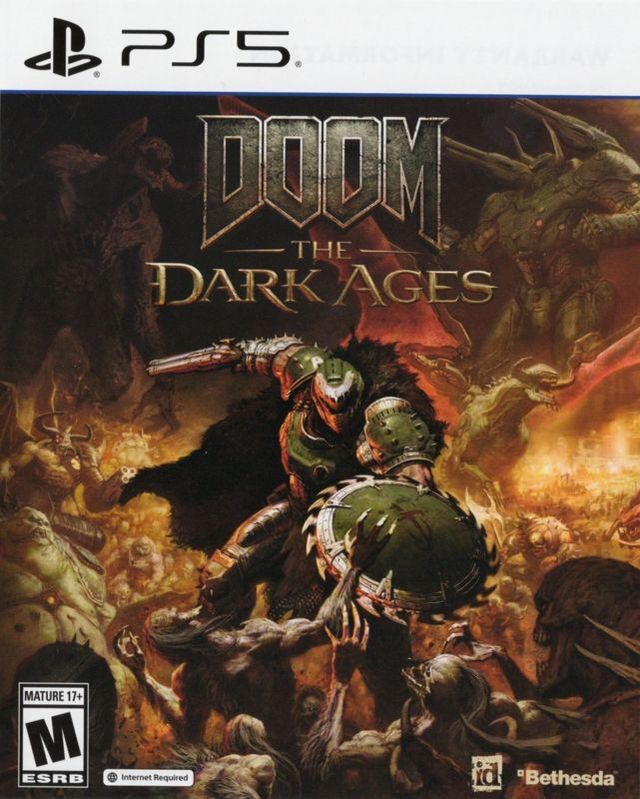
Description
Doom: The Dark Ages is a first-person shooter and be the eighth mainline entry in the Doom franchise. It serves as a prequel to the events of Doom (2016). The game marks a stylistic and mechanical shift for the series, blending the franchise's hallmark combat with medieval-inspired aesthetics and grounded, tactical gameplay.
Unlike its immediate predecessors, Doom (2016) and Doom Eternal, which emphasized fast-paced, acrobatic movement and an aggressive flow of combat driven by double jumps, dashes, and environmental mobility, Doom: The Dark Ages adopts a slower, more deliberate approach. Combat in this title is centered around the concept of the Doom Slayer as an "iron tank," relying on heavy weaponry, shield-based mechanics, and enhanced melee capabilities. The game introduces a new core mechanic in the form of the Shield Saw, which allows for parrying, blocking, and offensive attacks with a single input. This shield also plays a role in both traversal and puzzle-solving, interacting with heated enemy armor and environmental objects in explosive ways. The Doom Slayer's arsenal includes new weapons such as the Skull Crusher, a gun that fires bone fragments, and a variety of melee options including a flail, gauntlet, and iron mace.
The game places a renewed emphasis on narrative and world-building, expanding on the origins of the Doom Slayer and the lore of Argent D’Nur. Set during an ancient war between the Night Sentinels and the forces of Hell, the story features new characters including Kreed Maykr, Thira, and the antagonist Prince Ahzrak. Cutscenes and character-driven plot points are more prominent than in prior entries, offering a deeper exploration of motivations and internal conflict, particularly surrounding the Slayer’s struggle with external control through a device known as the Tether.
Gameplay also features large, open-ended battlefields in contrast to the more confined arenas of previous titles. Enemies often spawn in formation or waves, encouraging strategic prioritization and varied approaches to combat. While the pace is more grounded, the intensity remains high. Tactical decision-making is reinforced through mechanics that reward precise timing and environmental awareness, such as executing parries to trigger area-of-effect reactions or managing cooldowns for melee attacks. There are also vehicle segments, including the piloting of a cybernetic dragon and a 30-story Atlan mech.
Melee combat plays a more prominent role than in earlier installments, with three distinct melee weapons each possessing unique abilities and upgrade paths. Despite the heavier tone and slower pacing, the game retains Doom’s identity through its fluid weapon-switching system, lack of reloading, and emphasis on rhythmic, visceral combat. Classic elements such as keycard-based level progression and secret areas return.
Level design features expansive environments including corrupted churches, haunted forests, shipyards, and Hellish wastelands. These areas combine Doom’s legacy of labyrinthine exploration with broader, almost battlefield-like layouts. Environmental interaction plays a larger role than before, with the shield used to manipulate terrain and mechanisms.