Citizen Sleeper 2: Starward Vector
Description
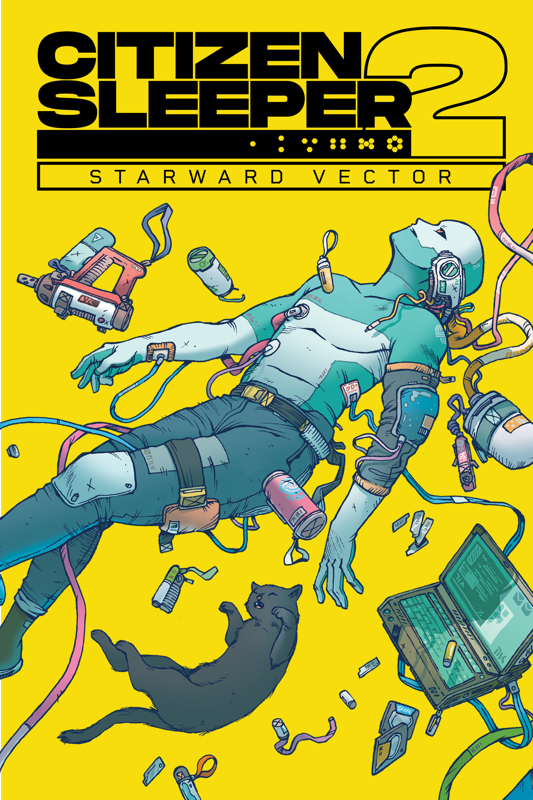
Citizen Sleeper 2: Starward Vector is a single-player narrative-driven role-playing game. The story continues in the same universe as Citizen Sleeper, where the player takes the role of a Sleeper, an artificial body carrying a copied human mind. This Sleeper has escaped corporate ownership and now finds themself piloting a stolen ship in the Starward Belt, a lawless expanse at the edge of inhabited space. Together with a small crew gathered along the way, the player must survive on the margins, forge alliances, and search for meaning in a sector where factions, stations, and outlaws struggle for resources and control.
Gameplay centers on the tabletop-inspired dice cycle system carried over from the first game. Each cycle, the player rolls a pool of dice representing available actions and assigns them to tasks across stations, ships, and encounters. Higher values increase chances of success in dangerous work, while lower values may still be useful for routine labor or dialogue-driven challenges. This structure governs how the Sleeper explores locations, completes contracts, and pushes forward story threads, balancing risk against survival needs.
Progression is tied to managing both the Sleeper’s decaying synthetic body and the upkeep of their ship. Players must secure stabilizer doses to prevent breakdown while also maintaining the vessel’s systems through repairs and upgrades. Ship modules can be expanded to add workstations, living quarters, or specialized equipment that open new opportunities during voyages. Running a ship also means managing fuel, supplies, and crew well-being, as neglecting any element can undermine long-term survival.
Crew recruitment and relationships are central to advancement. Each companion comes with skills, backstory, and personal quests that intersect with the larger political and social struggles of the Belt. Crew members influence which contracts are available and how events unfold, while also bringing new abilities to the dice system. Their loyalty and morale can shift depending on the player’s choices, creating branching paths for missions and endings.
Dialogue remains a core feature, with branching narrative choices tied closely to character relationships and faction outcomes. Unlike traditional morality systems, outcomes reflect pragmatic survival in a hostile world rather than binary good or evil paths. Story arcs are designed to be modular, allowing the player to pursue threads in different orders, with each playthrough producing a different sequence of alliances and consequences.